

Fraser Yachts and the Future of Sustainable Yachting
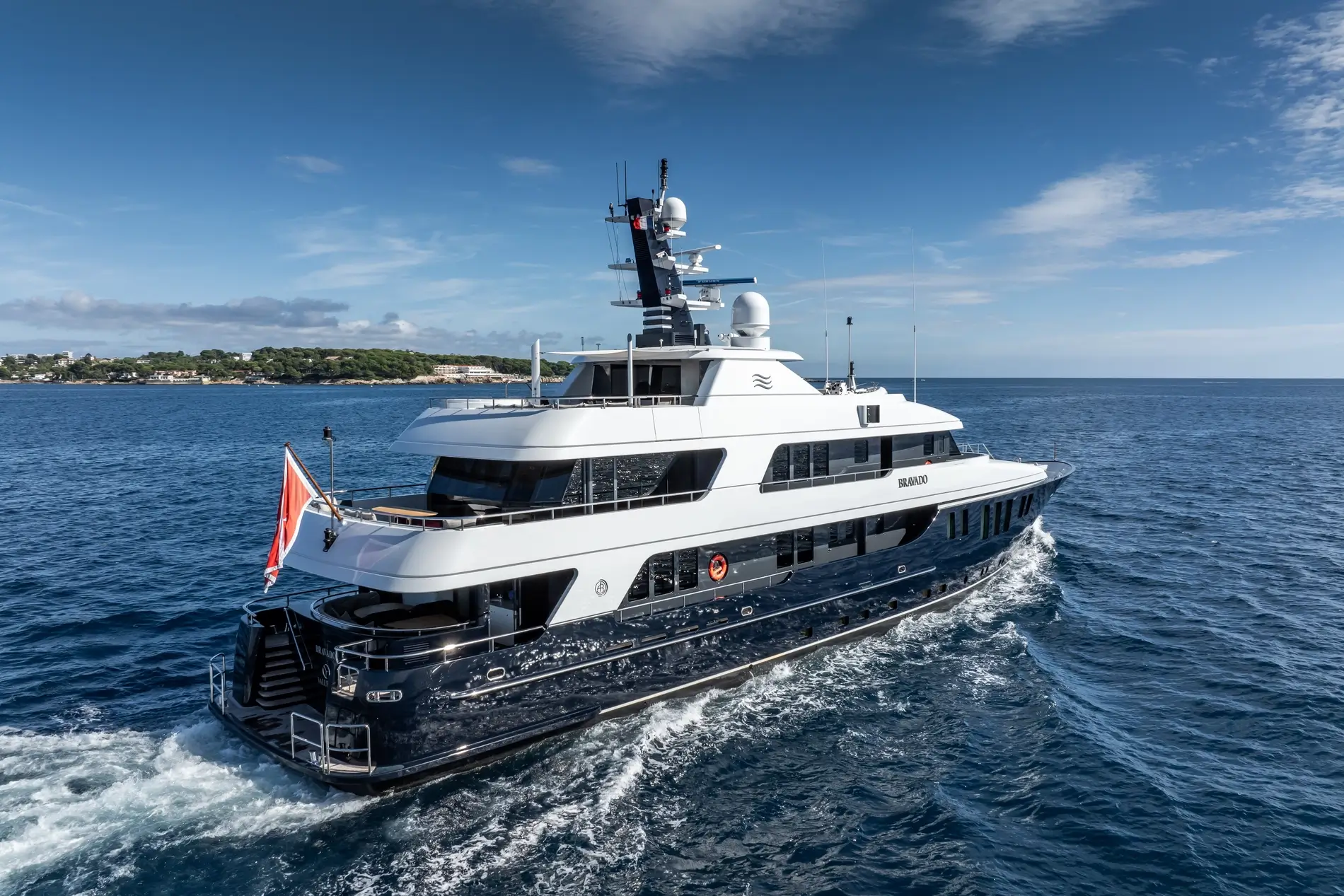
For nearly eighty years, Fraser Yachts has helped owners define what luxury at sea looks like. Today, that definition is shifting. Under the leadership of CEO Anders Kurtén, the brokerage is steering conversations toward responsibility as much as refinement. “You don’t need a hydrogen yacht to make a difference,” he says. Instead, Fraser guides owners through practical choices—cleaner fuels, smarter operations, and technology that extends the lifespan of the fleet—so that the experience of yachting can endure for generations without losing its grandeur.
Luxury doesn’t have to apologize for existing; it has to justify itself. In yachting, that means moving from marketing lines to measurable habits: quieter propulsion, smarter energy systems, and crews trained to run a boat like a modern micro-hotel with a carbon budget. Evolution beats revolution because the fleet is already afloat; owners will upgrade between refits, not scrap perfectly capable vessels overnight. The brands that win aren’t shouting slogans—they’re building checklists, dashboards, and supplier networks that make lower-impact choices the default. Guests notice it, too. A silent dawn departure on battery power, solar-topped hotel loads that keep the generator off at anchor, and tenders that sip instead of guzzle all translate to a calmer onboard experience. Better sustainability feels like better luxury. Fewer fumes, less vibration, more time focused on sea, sky, and conversation. That is why the most forward owners are now treating efficiency as an amenity. They aren’t buying hardship; they’re buying serenity, range, and resilience—comfort that keeps showing up in every harbor and every season.

Kurtén doesn’t promise quick fixes. “In this sector. . . it’s more about evolution than revolution,” he says. Fraser’s job is advisory—owners ultimately set the brief, and Fraser’s role is to break complexity into bite-size decisions. Fraser has embraced the Water Revolution Foundation’s Yacht Environmental Transparency Index (YETI)—a pioneering algorithm that evaluates yacht efficiency and environmental impact. Fraser was the first brokerage to commit its management fleet to YETI ratings, setting a precedent that competitors are now following.
The tool enables apples-to-apples comparisons of yachts, much like household appliance efficiency ratings. “For the first time, a client can look at two 70-meter yachts and objectively compare them through a sustainability lens,” Kurtén explained. In a market of “extreme scarcity,” where almost all 7,000 superyachts are unique and discretion is paramount, YETI becomes a way to compare options—at design review or during a five- or ten-year refit—for the best environmental “bang for the buck.” Already, Fraser sees YETI influencing charter bookings, as eco-conscious guests increasingly factor environmental credentials into their decisions.

On new projects, shipyards now offer diesel-electric, fully electric packages for sailing yachts, and even trials with hydrogen or methanol—a range of options that simply didn’t exist 10–15 years ago. But the math matters: with roughly 7,000 superyachts afloat and fewer than 200 new 30-meter contracts in a typical year, cleaner tech on a handful of new hulls won’t shift the fleet’s total emissions; the real work is how existing boats are run.
Fraser’s sustainability plan is intentionally practical, built for the realities of existing yachts. It centers on four moves owners can make now: switching from conventional diesel to HVO (Hydrotreated Vegetable Oil), a true drop-in fuel derived from treated vegetable oils that can cut emissions by up to 80 percent without major retrofits; choosing marinas that offer renewable shore power, where yachts spend more than half their lives; easing average cruising speeds to meaningfully reduce fuel burn; and training captains and crew to adopt circular, sustainability-minded procurement. “It’s really about showing owners that they can start yesterday,” Kurtén emphasized. “There are meaningful changes that require little to no investment in new hardware.”
Reading the market also requires patience. Kurtén cautions against drawing conclusions from year-to-year blips; reliable trend lines emerge over three- to five-year windows. On pricing and finance, the picture is early: insurers and lenders are not yet rewarding greener builds with better terms, and any uplift in resale or charter season length is too soon to call. Even so, he expects adoption to follow an EV-like arc—early movers now, broader uptake as systems mature. Fraser’s push for YETI was meant to create a “signal effect,” and it’s working: Burgess has joined, and charter clients increasingly ask about a yacht’s sustainability credentials before they book.

Kurtén’s view on sustainability comes from a career that stretches beyond yachting. He cut his teeth in the early internet, so today’s AI buzz feels like déjà vu—plenty of noise, real potential underneath. He then spent a decade leading product at a major powerboat builder and later moved to Baltic Yachts, where sailing superyachts serve as a proving ground for new technology.
At Baltic, Kurtén oversaw groundbreaking work in electric propulsion and hydrogeneration—technologies capable of allowing a yacht to cross the Pacific without burning a drop of fossil fuel. This experience now informs his leadership at Fraser, where innovation is a necessity.
Kurtén doesn’t treat sustainability as theory. He grew up spending summers in Finland’s archipelago, where his family has kept cottages for generations, and he’s seen once-clear water give way to algae and a stressed ecosystem. “It’s personal,” he said. “I want my kids to experience the same freedom I had. And our clients feel the same, influenced by what their children and grandchildren filter back to them.”

That lens helps explain the market shift. What used to be cocktail-party chatter now sells. Since the pandemic, first-time buyers and charterers—often younger and more climate-aware—have poured in. Kurtén calls it “a healthy injection” for the industry.
Perhaps the biggest misconception, according to Kurtén, is that sustainable yachting is prohibitively expensive. “You don’t need to build a hydrogen yacht for hundreds of millions of dollars to make an impact,” he said. With fuels like HVO and smarter operational practices, significant reductions are possible today—and often without significant added costs.
Yes, sustainable fuels carry a modest premium, but as Kurtén points out, the cost of fuel is a relatively small fraction of total yacht ownership. A 10–15 percent surcharge on fuel is negligible compared to the long-term benefits of reducing emissions.
Innovation on board extends well beyond propulsion. As Kurtén notes, three adaptations are moving from niche to normal: hydrogeneration on sailing yachts, which lets vessels generate their own electricity at sea; hybrid propulsion systems that give designers more freedom and better use of space; and the rapid rise of electric tenders and toys, which reduce onboard fuel storage today and could soon feed power back into the yacht’s own energy system.

Yards are also rethinking their manufacturing processes—from switching to renewable electricity for heating and lighting, to replacing combustion-powered forklifts and cranes, to cutting unnecessary business travel. “Sometimes the simplest operational choices—green energy at the yard or fewer flights—yield the largest footprint reductions,” Kurtén explained.
The superyacht industry is no stranger to criticism. Environmental activists often accuse it of “greenwashing”—token gestures like carbon offsets or plastic-free offices that pale against the emissions of a single transatlantic crossing.
Kurtén acknowledges that, yes, there is sometimes truth in the charge. But he stresses the disproportionate influence of yacht owners: a tiny demographic that controls more than 10 percent of global assets. “When they choose sustainability, it creates a powerful signal effect,” he argued. Many are philanthropists who already contribute to environmental causes, and their yachts can become platforms for transformational experiences—taking grandchildren to remote ecosystems and instilling values that ripple through generations.
Looking forward, Kurtén envisions a tipping point within two decades. “When a third to half of the fleet has adopted technologies that significantly reduce life cycle emissions, sustainability will no longer be optional—it will be standard.” Refits, not just new builds, will drive much of this transformation, though the industry may soon face a bottleneck in refit capacity. In the meantime, Fraser’s message is clear: technology exists today to make meaningful changes. Clients need only listen to the right advisers and be willing to act.

If luxury means “hard to make, hard to find, and built to last,” superyachts are the case study. Many outlive their first owners. Choose cleaner fuel, smarter propulsion, and better onboard practices, and you’re not compromising luxury—you’re making sure it endures.
Yachting has always meant freedom—go where you want, anchor in quiet coves, gather the people you love in privacy. That freedom comes with responsibility. Under Anders Kurtén, Fraser Yachts is showing how: practical steps, third-party checks like YETI, and a mindset shift among owners and brokers. Sustainability is no longer a side note; it’s part of the brief. As Kurtén put it: “There are ways in which you can continue to live this lifestyle in an environmentally responsive manner. We have the technology. We have the solutions.”
